
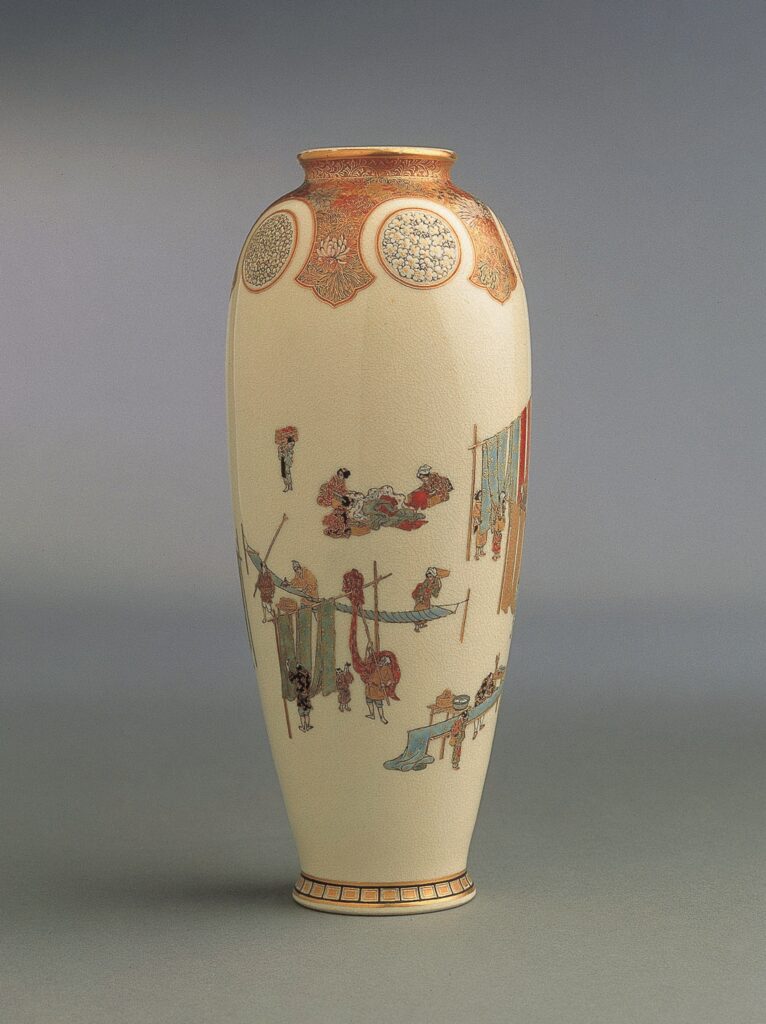

The tapering ovoid body of this vase, with its short, slightly flared neck and foot, is painted with the stages of finishing silk. Workers decorate, dry and fold long lengths of cloth, in the kind of orderly, documentary scene of craft labour that the studio made its own. On the shoulder a shaped border of millefleurs encloses roundels of pink and white cherry blossom.
The vase is especially important for what it reveals about method. The Khalili Collection notes that the original copper-plate design for this composition survives in the Osaka City Museum, donated by the Yabu family. The plate was used to print the design on paper. The printed sheet was then cut out and laid on the glazed blank so that the outline could be impressed into the surface, giving the painters a guide. The technique explains how the studio could repeat intricate compositions with such consistency. The vase dates to about 1910 and stands 18 centimetres high.