
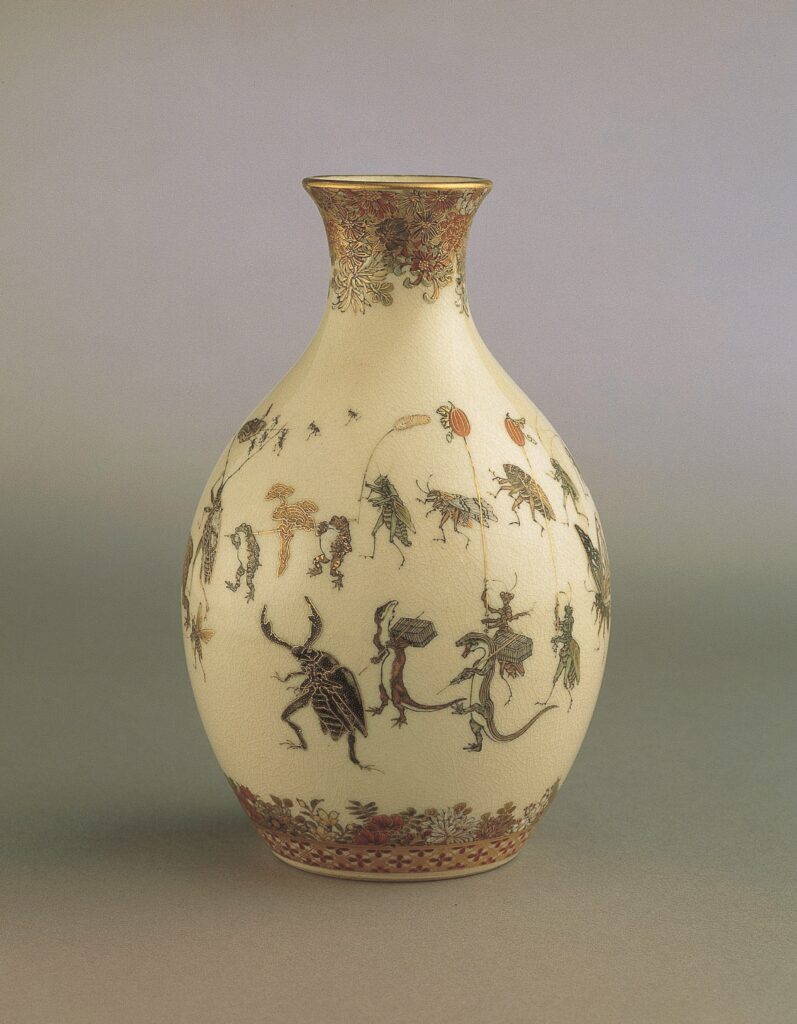

Here Meizan’s beloved procession subject is turned into a comedy. Around the ovoid body of this small vase marches a daimyō’s retinue made up entirely of insects, lizards and frogs. A stag beetle leads the way, followed by lizards, a mantis, a butterfly, a caterpillar, wasps and a cicada. A snail rides in a leaf palanquin, a frog is led on a tether, bees carry a nest, and at the rear a column of ants drags a fish-head. Flowers decorate the neck and base, and a geometric flower-head border runs around the foot.
The Khalili Collection connects the conceit with a long Japanese tradition of caricaturing human affairs through animals. Its most famous example is the Chōjū giga, the medieval scrolls of frolicking birds and beasts. The vase dates to about 1910 and is 11.7 centimetres high. It is published in Impey and Fairley (1995), cat. 86, and Earle (2002), cat. 101.