
The Meizan studio used a small, consistent set of marks, and in its prime it used one above all: “Yabu Meizan” (藪明山) in gold within a square cartouche. This page sets out what museum records, auction catalogues and published research actually document, gives some cautious dating hints, and separates confirmed features from claims that cannot yet be confirmed.
A mark is evidence, not proof. Satsuma signatures worked as studio or brand marks, and satsuma-database stresses that the quality of the decoration, not the mark, must decide an attribution.1,2 Even the major auction houses catalogue some pieces bearing a Meizan inscription as “after Yabu Meizan”.3,4
The documented studio marks
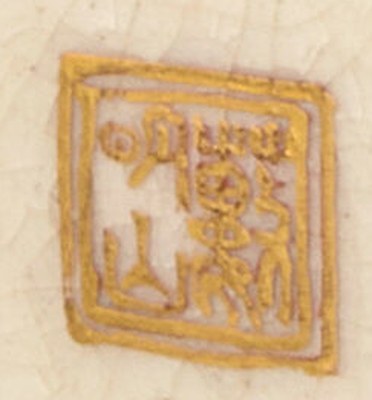
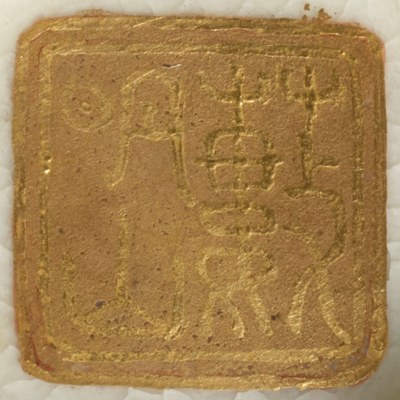
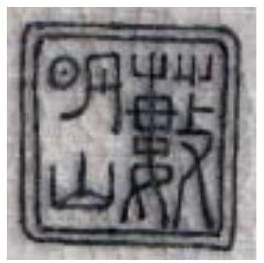
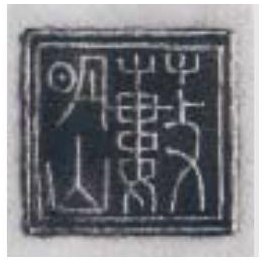
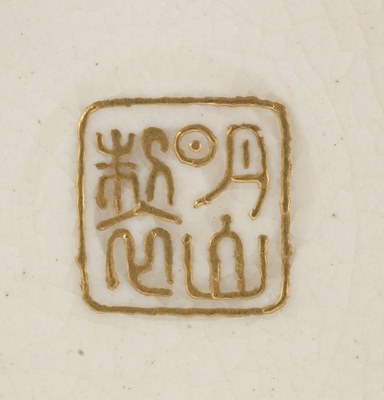
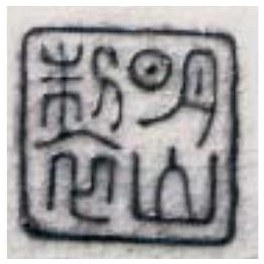
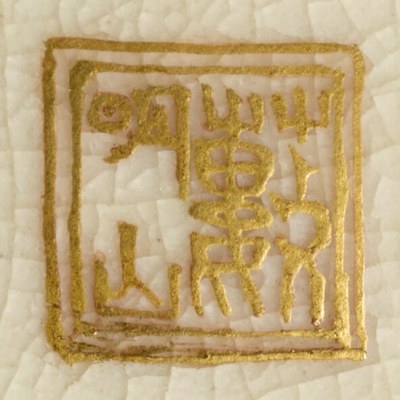
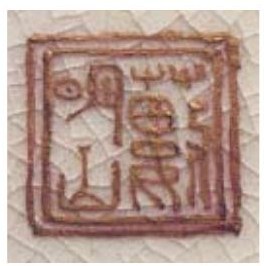
1. “Yabu Meizan” (藪明山) in a gilt square cartouche: the standard mark
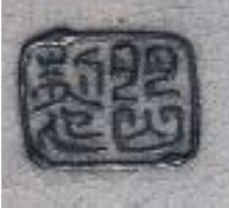
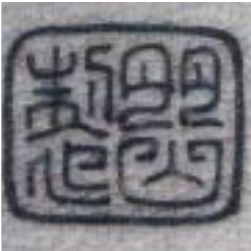
This is the mark found on most of the studio’s work. The Victoria and Albert Museum records it as “‘Yabu Meizan’ in a square gilt panel” on pieces acquired in 1910.5,6 Auction catalogues describe the same mark as “in a square cartouche”, “within a gilt square seal” and, on the 2017 presentation vase, “in a double square reserve”.7,8,9 Studio advertisements used the seal as a trademark. Gotheborg’s mark no. 874 is taken from an advertisement of 1904.2,10 Satsuma-database dates its dominance from the early 1890s onward.2


2. “Meizan sei” (明山製, “made by Meizan”): the early mark
This gilt mark appears on a small number of early pieces. The Osaka Museum of History’s charger with a white elephant and Chinese children, dated before about 1890, carries it.11 So do a children’s-procession beaker sold at Bonhams in London in 2014 and a covered jar sold at Bonhams Cornette de Saint Cyr in Paris in 2025.12,13 Satsuma-database suggests it was the forerunner of the “Yabu Meizan” seal, used probably until the early 1890s. It also notes that no documentation shows how the studio signed in 1880–1885.2
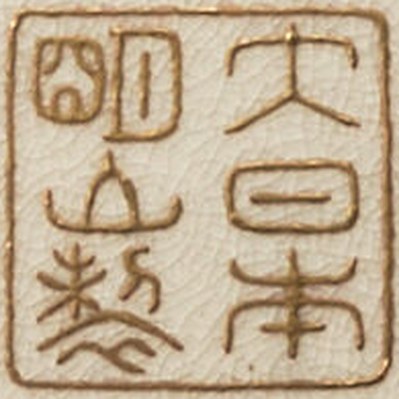
3. “Dai Nihon Meizan sei” (大日本明山製): exceptional pieces
大日本 (“Great Japan”) is also romanised “Dai Nippon”. This archive uses “Dai Nihon” throughout, as in the Bonhams catalogue entry cited below.
The longer form, “Meizan of Great Japan”, is documented on a large early charger with a white elephant and children, sold at Bonhams in New York in 2022. Bonhams compared it with a near-identical charger in the Khalili Collection.14 Satsuma-database describes this mark as reserved for exceptional pieces.2 It is uncommon. It does not support the idea that any mark beginning “Dai Nihon” is suspect, nor that any such mark is genuine.
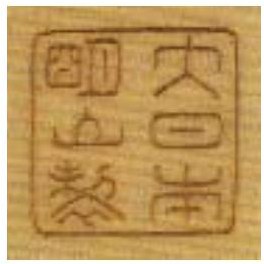
4. Impressed marks: rare, and only alongside the gilt mark
A few pieces combine the gilt mark with an impressed one. A small vase sold at Bonhams in 2025 was “signed on the underside in gilt and with an impressed signature Yabu Meizan”.15 A large vase from the Kasten collection, sold in 2017, carried gilt “Yabu Meizan” with an impressed “Meizan”.16 In both, the impressed mark accompanies the gilt seal rather than replacing it. Who applied it is not documented. It may have been a blank supplier or the studio itself. Note that Gotheborg describes the unrelated Kanazawa Meizan as “generally signed or impressed Meizan”.10
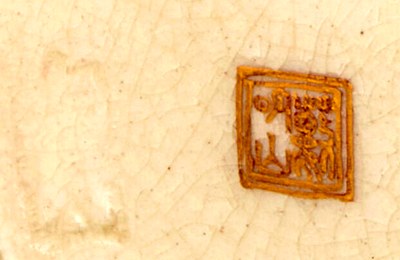

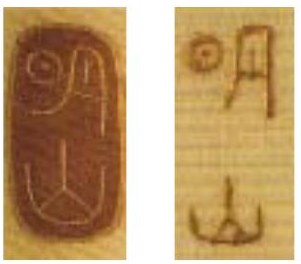
5. “Meizan” (明山) alone: Yabu Tsuneo, after 1926
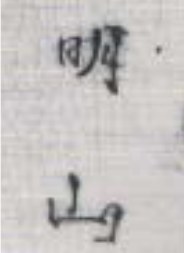
Plain “Meizan”, without “Yabu”, is attributed by Louis Lawrence, Bonhams and Gotheborg to Meizan’s successor Yabu Tsuneo, after Meizan’s retirement in 1926.2,10,17 The dating is not entirely settled. Satsuma-database considers whether plain “Meizan” could also have been Meizan’s own earliest mark, and concludes that it should remain attributed to Tsuneo.2 Against this, a bowl in the Tanabe Collection at the Shigaraki Ceramic Cultural Park is dated to the Meiji period and recorded with a seal mark reading only 「明山」.18 Until that conflict is resolved, a plain “Meizan” mark should be treated as needing expert review.
6. “After Yabu Meizan”: inscribed pieces outside the studio
Bonhams has catalogued a large covered vase inscribed in gilt “Meizan” as “after Yabu Meizan”. In 2026 it sold an incense burner inscribed “Yabu Meizan” as “after Yabu Meizan”, offered together with a genuine signed miniature vase.3,4 These cataloguings show how much the specialist trade relies on the quality of the painting, not on the mark alone.
Dating hints (tentative)
The following hints come from satsuma-database’s reading of the evidence. They are presented there as presumptions, not documented rules.2
- “Meizan sei” generally indicates an early piece, probably before the early 1890s.
- Gold seal on a white ground probably indicates a date no later than about 1900.
- Gold seal on a gold ground of a different tone probably indicates a date after 1900.
- Plain “Meizan” is attributed to Tsuneo after 1926, with the caveat above.
The character 明: a circle and a dot
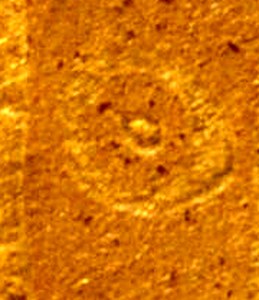
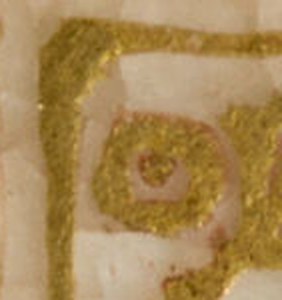
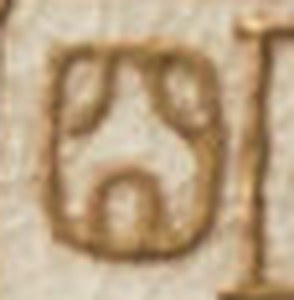
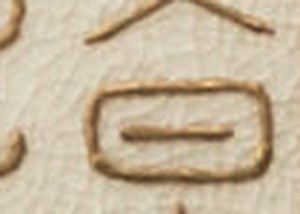
A distinctive feature of the studio’s calligraphy is the left-hand element of 明 (“mei”). It is drawn not as the usual box-like 日 but as a circle containing a dot.2 The same form appears in Tsuneo’s plain “Meizan” mark.2 Satsuma-database reports Louis Lawrence’s observation that there is one known exception, which it connects with exceptional work.2 The feature is a useful point of comparison, but a copyist could imitate it, so it is not proof of authorship on its own.
Marks most often confused with Meizan’s
Kanazawa Meizan
A separate decorator who signed “Meizan sei”, identified by Louis Lawrence. According to satsuma-database it is the only other “Meizan” of comparable quality, and so the main risk of confusion.2 The Osaka Museum of History records period copies of Meizan’s work marked 大日本帝国加賀金沢明山製 (“made by Meizan of Kanazawa, Kaga, Great Imperial Japan”).19 The two accounts frame this differently: the museum treats these pieces as imitations of Meizan, while Lawrence treats Kanazawa Meizan as a separate maker.
Other “Meizan” signatures
Several Satsuma decorators used the name. Gotheborg lists Hododa Meizan (保土田明山).10 A gilt square seal on a red ground reading 京都 明山 (“Kyoto Meizan”) is judged by Oriental Antiques not to be Yabu Meizan.20 According to Joe Earle, as cited on Wikipedia, Meizan’s success led another workshop to use his name and imitate his style without matching its subtlety.21
Kinkozan (錦光山)
The large Awata workshop in Kyoto, associated with Kinkozan Sōbei VII (1868–1927), which also supplied blanks to Meizan.22,23 Kinkozan pieces carry their own marks, sometimes with a painter’s name such as Sozan.24
Ryozan and Seikozan
Okamoto Ryozan decorated for the Yasuda Company of Kyoto.25 Other makers signed with different characters also read “Ryozan”, so the kanji matter.10 Seikozan is associated with fine Kobe Satsuma.22 Both produced crowded, miniature-scale work that can resemble Meizan’s at first glance.
Lookalike marks compared
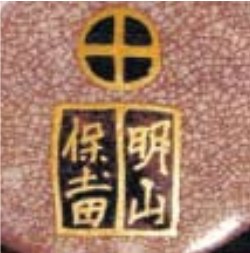
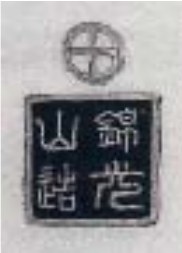
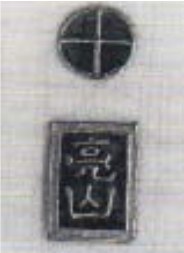
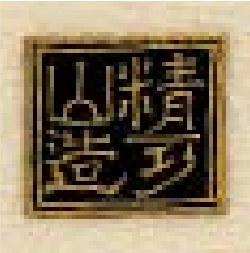
What we cannot confirm
The following claims appear in collectors’ literature and online. None of them is supported by the museum records, auction catalogues or published research consulted for this archive. Do not use them as tests of authenticity.
- Raised-gold (kin-moriage) signatures. No museum or auction record consulted describes the Meizan seal as raised.
- A rectangular seal. The documented cartouche is square, according to the V&A, Bonhams and satsuma-database. “Rectangular” appears only in dealer descriptions.5,7,2
- A double-gourd seal. Double-gourd vessels with the standard mark exist, but no gourd-shaped seal is documented.
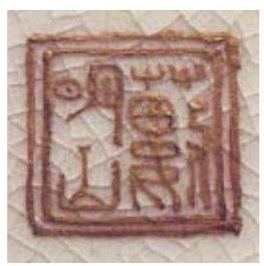
- Red or black enamel seals. No genuine example has been found. The red-ground “Kyoto Meizan” seal belongs to another decorator.20
- Crackle visible beneath the gold mark as a sign of authenticity. No source found.
- A “black-dot rim” as a Meizan hallmark. This is a dealer’s claim with no scholarly confirmation.
- “Meizan II” as a mark. Tsuneo is not recorded as signing in this form.2,10
The marks register
Each entry below records a mark type, the sources that document it, and its verification status.
0 shown / 7
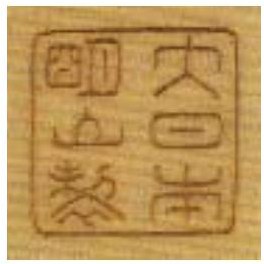 “Dai Nihon Meizan sei” (大日本明山製)Dai Nihon Meizan sei (大日本明山製)Mark documented
- “Kyoto Meizan” (京都 明山) seal on a red groundOtherLookalike / other decorator
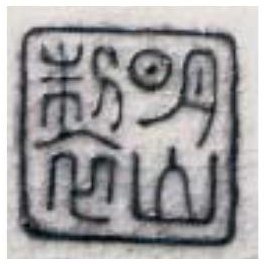 “Meizan sei” (明山製), early studio markMeizan sei (明山製)Mark documented
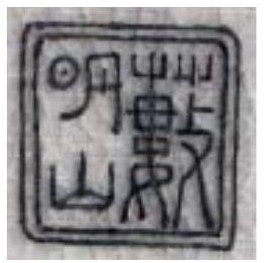 “Yabu Meizan” (藪明山) seal, gold on a white groundYabu Meizan (藪明山)Mark documented
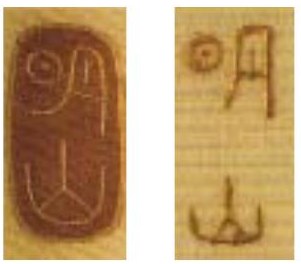 “Meizan” (明山) mark of Yabu Tsuneo, after 1926Meizan (明山, Tsuneo/post-1926)Under review
 Inscribed pieces catalogued “after Yabu Meizan”OtherLookalike / other decorator
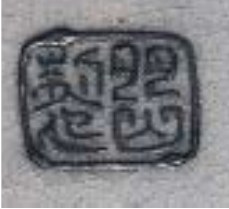 Kanazawa Meizan and the “Kaga Kanazawa Meizan sei” markOtherLookalike / other decorator
No marks match these filters.
- Mark documented
- verified against the sources cited on the mark’s own page.
- Lookalike / other decorator
- a similar mark used by another studio or decorator, shown for comparison; not a Yabu Meizan studio mark.
- Under review
- the reading or dating is still being checked against sources; not yet counted as documented.
Notes and sources
- Satsuma-database, “Marks & Makers”. www.satsuma-database.com/marks-makers-1
- Satsuma-database, “The Meizan Studio (1880–1941): Yabu Meizan and Yabu Tsuneo” (synthesising the research of Nakano Tomoko, Osaka Museum of History). www.satsuma-database.com/masters-from-edo-meiji-and-taisho-period/8-the-meizan-studio-1880-1941-yabu-meizan-and-yabu-tsuneo
- Bonhams, New York, 13 September 2017, sale 24293, lot 1287 (“after Yabu Meizan”). www.bonhams.com/auction/24293/lot/1287/a-large-satsuma-vase-and-cover-after-yabu-meizan-meiji-era-1868-1912-late-19th-century
- Bonhams, New York, 16 September 2026, sale 31888, lot 1066 (“Yabu Meizan and after Yabu Meizan”). www.bonhams.com/auction/31888/lot/1066/yabu-meizan-1853-1934-and-after-yabu-meizan-a-miniature-satsuma-vase-and-a-satsuma-incense-burner-meiji-era-1868-1912-late-19thearly-20th-century-2
- Victoria and Albert Museum, C.252-1910. collections.vam.ac.uk/item/O171087/bowl-yabu-meizan-workshop
- Victoria and Albert Museum, C.231-1910. collections.vam.ac.uk/item/O496033/vase-yabu-meizan-workshop
- Bonhams, New York, 16 September 2014, sale 21786, lot 2128. www.bonhams.com/auction/21786/lot/2128/a-miniature-satsuma-vase-by-yabu-meizan-meiji-period-late-19th-century
- Bonhams, London, 7 November 2019, sale 25429, lot 137. www.bonhams.com/auction/25429/lot/137/a-satsuma-cylindrical-brushpot-by-yabu-meizan-1853-1934-meiji-era-1868-1912-late-19thearly-20th-century
- Bonhams, New York, 13 September 2017, sale 24293, lot 1286. www.bonhams.com/auction/24293/lot/1286/yabu-meizan-1853-1934-a-large-and-highly-important-satsuma-presentation-vasemeiji-era-1868-1912-early-20th-century
- Gotheborg.com, Satsuma marks (including nos. 477 and 874). gotheborg.com/marks/satsuma.shtml
- Osaka Museum of History, collection feature “Yabu Meizan”. www.osakamushis.jp/collection/bijutsu/yabumeizan/yabumeizan.html
- Bonhams, London, 15 May 2014, sale 21861, lot 467. www.bonhams.com/auction/21861/lot/467/a-satsuma-beaker-by-yabu-meizan-meiji-period
- Bonhams Cornette de Saint Cyr, Paris, 15 October 2025, sale 30765, lot 2. www.bonhams.com/auction/30765/lot/2/yabu-meizan-1853-1934-une-jarre-satsuma-avec-son-couvercle
- Bonhams, New York, 21 September 2022, sale 27600, lot 710. www.bonhams.com/auction/27600/lot/710/yabu-meizan-1853-1934-a-large-and-fine-satsuma-chargermeiji-era-1868-1912-circa-1890
- Bonhams, New York (online), 16 December 2025, sale 31201, lot 1. www.bonhams.com/auction/31201/lot/1/yabu-meizan-1853-1934-a-small-satsuma-vasemeiji-era-1868-1912-circa-1910
- Bonhams, New York, 15 March 2017, sale 23784, lot 6245. www.bonhams.com/auction/23784/lot/6245/yabu-meizan-1853-1934-a-large-and-fine-satsuma-vasemeiji-era-1868-1912-late-19th-century
- Bonhams, New York, 11 September 2019, sale 25575, lot 875 (Yabu Tsuneo, active after 1926). www.bonhams.com/auction/25575/lot/875/yabu-tsuneo-active-after-1926-a-pair-of-gourd-shaped-satsuma-vasesshowa-era-1926-1989-20th-century
- Shigaraki Ceramic Cultural Park, Museum of Contemporary Ceramic Art, digital museum feature on Yabu Meizan. digital-museum.sccp.jp/osusume/kamiwazanippon/yabu
- Osaka Museum of History, special exhibition “Meizan Satsuma no bi” (31 August – 24 October 2005). www.osakamushis.jp/news/2005/meizan.html
- Oriental Antiques, “Japanese porcelain marks”. orientalantiques.co.uk/uncategorized/japanese-porcelain-marks
- Wikipedia, “Yabu Meizan” (citing Library of Congress authority file; Yamazaki Tsuyoshi in Impey and Fairley 1995; Earle 1999; Launius 2020). en.wikipedia.org/wiki/Yabu_Meizan
- Kiyomizu Sannenzaka Museum, Kyoto, special exhibition “Kyoto Satsuma ware”. sannenzaka-museum.co.jp/en/special_exhibition/%e4%ba%ac%e8%96%a9%e6%91%a9-3-2
- Walters Art Museum, Baltimore, 49.2280, “Bowl with a Multitude of Women”. art.thewalters.org/object/49.2280
- Bonhams, New York, 11 September 2019, sale 25575, lot 881 (Sozan for the Kinkozan workshop). www.bonhams.com/auction/25575/lot/881/sozan-for-the-kinkozan-workshop-circa-1900-a-large-and-fine-satsuma-vasemeiji-era-1868-1912-early-20th-century
- Bonhams, New York, 11 September 2019, sale 25575, lot 879 (Okamoto Ryozan for the Yasuda Company). www.bonhams.com/auction/25575/lot/879/okamoto-ryozan-for-the-yasuda-company-a-fine-satsuma-incense-burnermeiji-era-1868-1912-late-19th-century